
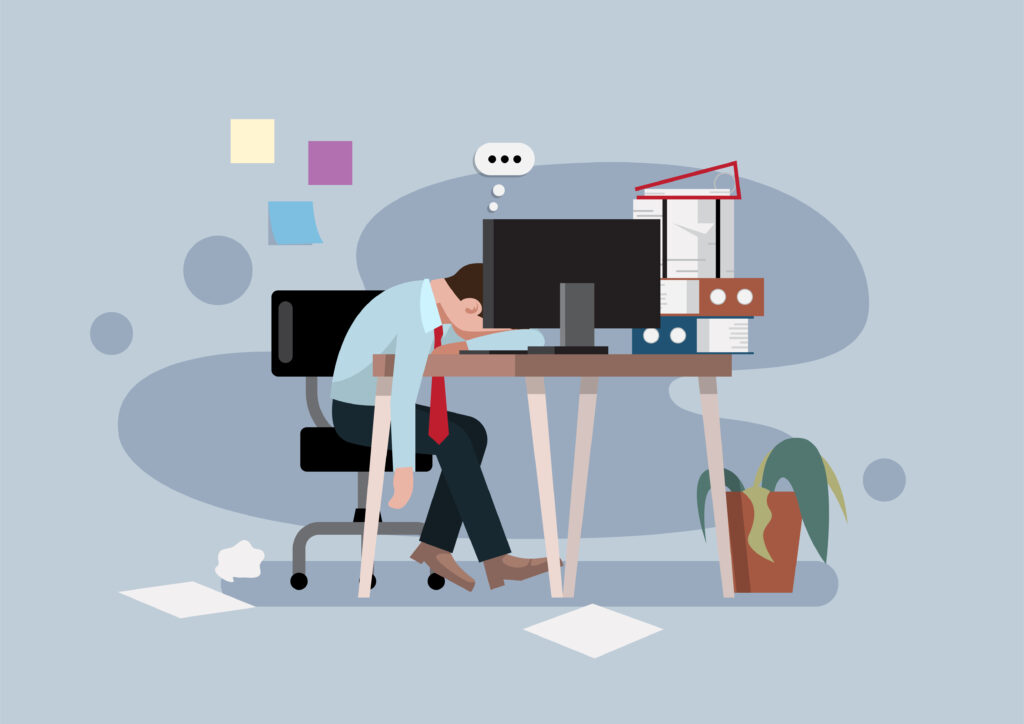
We’ve all been there. It’s 5:30 PM. You’ve spent the last eight hours sitting in an ergonomic chair, staring at a screen, and typing. Physically, you haven’t moved much—but mentally? You’re a shell of a human being.
Recently my friend Alex (for now lets call him) who is in he messaged me & put words to a feeling many of us share: “I have a desk job and zero energy after 5 PM. I’m trapped in a cycle of being ‘too tired to start’ the things I actually love.”
If your brain feels like mush the moment you close your laptop, you aren’t lazy. You’re experiencing sedentary burnout. Here is how to break the cycle and reclaim your evenings.
But let’s fix this with Alex’s example
The Turning Point: How Alex Broke the Cycle
For months, Alex lived in a loop. Work, crash, scroll, sleep. He felt like he was “saving” energy by sitting still, but he was actually rotting in place. One Monday, he decided to stop treating his body like a battery that ran out and start treating it like a spark that needed catching.
Step 1: The Mid-Day Reset
The change didn’t start at 5:00 PM; it started at 12:30 PM. Instead of eating a heavy pasta lunch at his desk while reading emails, Alex swapped it for a protein-rich salad and a forced 15-minute walk. He noticed that the “2 PM Wall” wasn’t a wall at all—it was a food coma. By moving his body while the sun was high, he signaled to his brain that the day was still in session. By the time 5:00 PM rolled around, the “brain mush” was replaced by a steady, quiet focus.
Step 2: The “No-Fly Zone”
The biggest trap Alex faced was the “Couch Magnet.” He realized that if his glutes touched the sofa cushions before 8:00 PM, the night was over.
He created a new rule: The Transition Zone. Instead of driving home to “change and rest,” he kept his gym bag in the passenger seat and drove straight to the gym. By doing this, Alex was practicing the primary lesson of Atomic Habits: Environment Design. James Clear argues that “motivation is overvalued; environment often matters more.” Alex realized that his home environment was designed for relaxation, which made it the enemy of his goals. By bypassing his house entirely, he removed the friction of choice. He didn’t have to “decide” to go to the gym; he was already there. He redesigned his path so that the “good habit” became the path of least resistance.
Step 3: The 10-Minute Contract (The 2-Minute Rule)
On the days when he truly felt like a zombie, Alex applied another Atomic Habits staple: The 2-Minute Rule. The rule states that “when you start a new habit, it should take less than two minutes to do.”
Alex told himself, “I don’t have to do a heavy 60-minute lift. I just have to get inside the gym and step on the treadmill for two minutes.” He discovered a profound truth: He wasn’t actually exhausted; he was just overwhelmed by the idea of a long workout. Once he mastered the “art of showing up,” the workout itself became easy. He stopped being a person who “tried to exercise” and became a person who “never missed a trip to the gym.”
The Result
Alex didn’t become a bodybuilder overnight. But he stopped being a ghost in his own life. By focusing on small wins and controlling his environment, he realized that while a sedentary job can drain your mind, a disciplined routine can reclaim your soul.
Follow @therightbook7 For More
Thanks For Reading, Read More