
How to Reduce Social Anxiety If You’ve Spent 5 Years in Isolation?
Five years.
That’s how long I lived in near-total isolation. Not locked away in some dramatic scenario—just me, a room, a phone, and an endless stream of distractions. At first, it felt like freedom: no obligations, no judgments, no pressure. But over time, that quiet comfort zone quietly eroded something essential. I forgot how to make eye contact. Conversations felt like high-stakes performances. Simple “hellos” triggered overthinking spirals. I wasn’t just disconnected from others—I had lost trust in my own ability to connect.
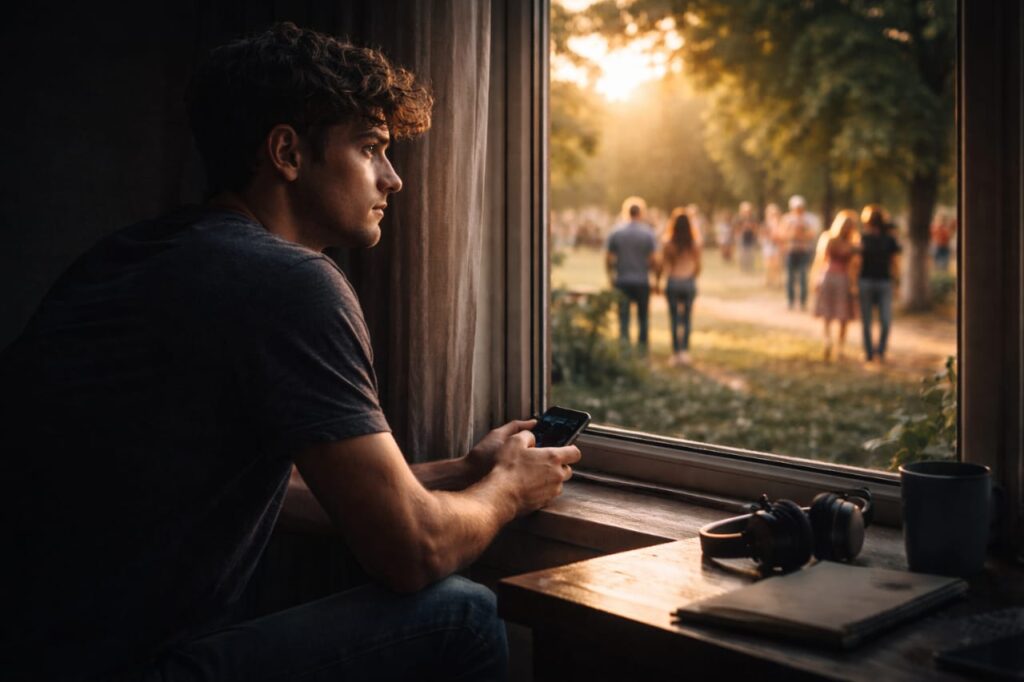
One day, the truth hit hard: I was dealing with social anxiety after years of isolation. Not the cinematic version, but the subtle, invisible kind that makes everyday interactions feel exhausting.
If you’ve spent a long time withdrawn—whether from pandemic habits, personal struggles, or life circumstances—you might recognize this. The good news? You’re not broken. You’re just out of practice. And social anxiety after prolonged isolation isn’t permanent; it’s a rewiring process that responds to consistent, gentle effort.
Here’s how I began to reduce social anxiety and rebuild my life outside those four walls—no quick fixes, no overnight transformations, just real, small steps that actually worked.
Understanding Social Anxiety After Long-Term Isolation
Before anything changes, it helps to understand what’s happening.
Years of isolation rewire your brain. Social skills fade like unused muscles. Your nervous system starts seeing people as threats because familiarity is gone. Overthinking becomes default mode: “What if I say something foolish?” “What if they judge me?” That quiet anxiety builds until even leaving the house feels overwhelming.
The key realization for me? This isn’t a character flaw—it’s a skill gap. And skills improve with practice, not willpower alone. Expecting to “snap out” of it after five years is unrealistic. Healing takes time, patience, and self-compassion.
Step 1: Start with the Smallest Win—Just Step Outside
I didn’t aim to become outgoing overnight. That would have backfired.
Instead, I focused on the tiniest action: stepping out of my room.
No agenda. No pressure to talk. Just walking outside.
Morning walks became my starting point. I’d head to a nearby park, sit on a bench, and simply observe. No phone. No earbuds. Just people-watching—how they greeted each other, laughed, moved through the world.
It felt awkward at first, like I was an alien relearning human behavior. But observation built safety. The world stopped feeling so hostile. I saw that most interactions were kind, ordinary, forgettable. That alone chipped away at the fear.
If you’re starting from zero, try this: Commit to 10-15 minutes outside daily. Breathe. Notice. Exist in the space without forcing anything. It’s exposure without overwhelm—and it’s powerful for reducing social anxiety after isolation.
Step 2: Rebuild with Tiny Social Signals
Once I felt safer being out, I added micro-interactions.
A nod to a passerby. A small smile. A quiet “good morning” to someone walking their dog.
Nothing deep. Nothing performative. Just basic human acknowledgment.
Most people responded positively—often with warmth that surprised me. That’s when it clicked: the world isn’t judging as harshly as my isolated mind assumed.
After weeks of this, I leveled up slightly. If someone was reading a book, I’d ask, “What’s it about?” If they were feeding birds, “How long have you been coming here?”
People love when you show genuine curiosity. You don’t need to be witty or charismatic—just present.
These small moments taught me a truth: To overcome social anxiety after years alone, focus on low-stakes practice. Build tolerance gradually.
Step 3: Embrace Consistency Over Instant Confidence
Anxiety didn’t vanish. There were still bad days—awkward silences, racing heartbeats, urges to retreat.
But I stopped chasing “fearless.” Instead, I chose consistency.
Every walk. Every nod. Every tiny question. Repeated exposure rewires the brain over time.
Social anxiety after long isolation isn’t a mood to fix—it’s a personality to rebuild. It requires patience, like learning an instrument after years away.
Celebrate the process. A single step outside counts as progress. Consistency compounds.
The Deeper Lesson: Healing Happens in Real Life, Not from Screens
Books, videos, and advice help guide but real change happens when you face discomfort alone.
No shortcuts. No filters. Just you, stepping into the world.
You can’t outsource this part. The growth comes from those repeated moments of courage.
Where I Am Today—and What It Means for You
I’m not the loudest person in any room now, But I’m no longer silent or panicked either because I can hold conversations, make eye contact, and exist comfortably outside my old comfort zone.
If you’ve spent years in isolation, hear this: You’re not irreparably damaged, You’re simply rusty.
Start small. Step outside. Observe. Offer a smile. Speak when it feels manageable, Stay consistent.
You don’t need to become fearless overnight. You just need to become available to life again.
Confidence isn’t born in silence—it’s forged in those tiny, repeated acts of showing up.
The world hasn’t moved on without you, It’s still here, waiting for you to come back.
You’ve got this—one small step at a time.
If this resonates, share your own starting point in the comments, What’s one tiny action you’re willing to try today?