
Hello everyone, I am excited to share my thoughts on my first ever read book where my reading and learning journey begun. Rich Dad Poor Dad By Robert Kiyosaki Book Review.
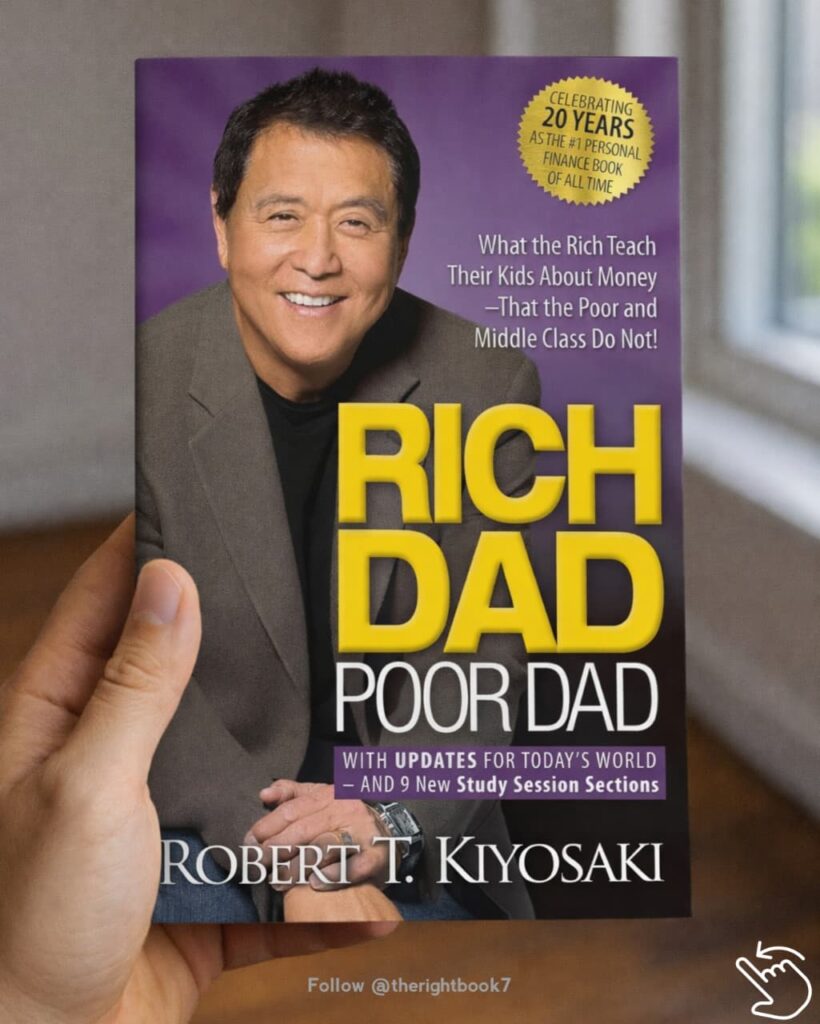
A Regular Day That Changed Everything
During my 10th-grade year, with exams approaching, I studied outdoors using my mother’s phone. I watched videos on improving exam scores and boosting productivity, often favoring book summaries for their clear, actionable advice.
Discovering Rich Dad Poor Dad
One day, a 20-minute video titled “Rich Dad Poor Dad Book Summary” appeared in my feed. Curious about its content, I watched it—and it left me silent, deep in thought about money: how it works, how to build wealth, retire early, and use it as a tool. Coming from a poor background, I’d never considered getting rich or making money work for me through business. A teenage boy had just entered a new world.
Devouring Knowledge and Buying the Book
Post-video, I consumed more content on wealth-building. After exams, I ordered the book for about five dollars. Truthfully, it bored me—it took two months to finish. Some principles felt novel, others confusing or overly simple, and I wondered how to apply them in real life.
Rereading for Growth
In high school, I reread it to grasp more, which significantly improved my English (though I’m still learning). The dream of riches captivated me: earning passively while sleeping, owning a mansion, luxury cars—everything imaginable. Yet, without a physical mentor, achieving it felt elusive.
Taking Action
On my third read, full understanding hit. I began applying the principles—and they remain core to my life today. This book transformed a teenager’s mindset, sparking lasting change. So, I will try to explain it to you as simple as possible.
Six life changing lesson’s from Rich Dad Poor Dad…
Lesson 1: The Rich Don’t Work for Money
The rich focus on making money work for them through passive income, rather than trading time for a paycheck driven by fear or greed. This shifts the mindset from employee to investor, escaping the rat race early.
Imagine you have two friends: Timmy and Sammy.
Timmy works all day at a lemonade stand, squeezing lemons and selling drinks. He gets tired and only has money when he’s working. That’s like most grown-ups who trade their time for money—they’re scared of not having enough, so they keep working harder.
Sammy is smart! He buys a lemonade machine that makes drinks by itself. Now, the machine works while Sammy plays. People pay Sammy for the lemonade, and he gets money without working every minute. That’s how rich people do it: they buy things (like machines or houses that rent out) that make money for them, even when they’re sleeping or playing.
The big idea? Don’t let money boss you around with fear. Be like Sammy—make your money grow on its own! so, Start owning.
Lesson 2: Why Teach Financial Literacy?
True wealth comes from understanding assets (which generate income) versus liabilities (which drain it). Financial statements reveal how the lower and middle class accumulate liabilities disguised as assets, like big houses, while the rich acquire income-producing assets.
Imagine you have a piggy bank and some toys.
An asset is like a magic toy that makes extra coins pop out every day—like a little lemonade stand you own that kids buy from, even when you’re not there. It puts money into your piggy bank and makes you richer.
A liability is like a fancy new bike that looks cool but costs you coins for repairs, locks, and parking. It takes money out of your piggy bank and makes you poorer.
Poor and middle kids think a big toy house is awesome (like buying a giant playhouse), but it actually costs more in upkeep than it gives back—it’s a sneaky liability! Rich kids buy the lemonade stand instead. Learn to spot the difference by checking your “money report card” (like a score sheet of what comes in and goes out), and you’ll grow your piggy bank big time!
Lesson 3: Mind Your Own Business
Prioritize building your asset column over climbing the corporate ladder or running someone else’s business. Job promotions often increase expenses and taxes, diluting wealth; instead, invest personal income into real estate, stocks, or ventures that pay you.
Imagine you and your friend are playing a game where you build your own toy castle.
Your friend works super hard helping the teacher’s castle grow bigger—he gets bigger candy rewards for promotions, but then spends it all on fancier tools, extra guards, and “taxes” to the teacher. His pile of candy stays small because he’s building someone else’s castle!
You? You mind your own castle. Instead of chasing teacher rewards, you use your candy to buy magic apple trees, a popcorn machine, or shares in a friend’s comic stand. These keep giving you free apples, popcorn, or comics to trade—even while you play. Your castle (and candy pile) grows huge!
The trick? Don’t climb someone else’s ladder—build your own money-makers like rental bikes or stock toys that pay you back forever.
Lesson 4: The History of Taxes and the Power of Corporations
Taxes hit the lower and middle class hardest first, while corporations (used by the rich) shield income through deductions and strategies. Historical context shows the rich invented modern tax loopholes, so learn to leverage them legally via businesses.
Imagine you’re playing a game where everyone shares some of their candy to build a big playground for all the kids.
Poor and middle kids give away a big chunk of their candy first—like 30% or more goes straight to the “playground boss” (the government). They don’t have secret ways to keep more, so they end up with less candy to play with.
Rich kids are clever! They make a “candy club” (like a pretend company). The club buys supplies and does fun stuff before sharing candy with the boss, so they pay way less—like using magic tickets (deductions) for club toys, trips, or helpers. Long ago, rich kids invented these club rules, so now they learn them and start their own club to keep more candy legally.
The trick? Don’t give candy away first—make a smart club to protect it and build your playground pile bigger!
Lesson 5: The Rich Invent Money
Wealth creation involves creativity, calculated risks, and spotting opportunities others miss—often through real estate deals or market timing. Overcome mental barriers like fear by training your financial IQ in accounting, investing, markets, and law.
Imagine you have a box of crayons and paper, but you want a super cool toy robot.
Rich kids don’t wait for allowance—they invent money! They get creative: trade a drawing for a friend’s marbles, spot a chance to sell lemonade when everyone’s thirsty (even if it means borrowing a pitcher—smart risk!), or buy a cheap broken bike, fix it with glue, and flip it for double the coins. Others miss these games because they’re scared of messing up.
You can too! Practice your “money smarts” like learning addition (accounting), treasure hunts (investing), playground deals (markets), and fair rules (law). Beat fear by playing small first—turn one crayon into ten toys, and soon your robot pile grows huge without begging!
Lesson 6: Work to Learn, Don’t Work for Money
Seek jobs for skill-building (sales, management, communication) over high pay, as specialization traps you in vulnerability. Rich dad advised diverse experiences to lead teams and multiply efforts, fostering entrepreneurship over job dependency.
Imagine you’re picking summer jobs at camp, not just for ice cream money.
Some kids grab the highest-pay job: scooping unlimited ice cream all day. Sounds great, but they’re stuck scooping forever—one rainy day, no work, no ice cream! They’re trapped doing just one thing.
Smart kids pick fun skill jobs: one day selling tickets (learn talking to people), next managing games (lead friends), then cooking snacks (run a mini team). They mix it up, so they can start their own ice cream stand later, bossing a crew and making way more treats without depending on camp.
The secret? Work to grab superpowers like selling, leading, and chatting—not just cash. Build a toolkit to invent your own ice cream empire!
Here’s What I Have Found
Rich Dad Poor Dad teaches that financial freedom comes from strong money education, acquiring income-generating assets over liabilities, and adopting a rich mindset—making money work for you instead of slaving for a paycheck.
Core Message
The book contrasts “poor dad” (educated but financially struggling) with “rich dad” (uneducated but wealthy), urging readers to prioritize financial IQ, assets like real estate or investments, and entrepreneurship to escape the “rat race” of jobs, taxes, and debt.
Positive Views
Many praise its motivational spark for beginners, crediting mindset shifts on assets vs. liabilities and personal financial control that prompted first investments. (I am one of them)
Negative Views
Critics slam it as simplistic, poorly written fiction with bad advice like tax schemes or MLMs; Kiyosaki’s arrogance and later promotions (e.g., silver) erode credibility. (Now I realized)
Neutral Views
It’s engaging via storytelling but generic—useful for novices’ basics, though lacking depth or practical steps beyond inspiration. (But still I love it.)
Final thought
If you are a teenager who has no knowledge then you can start with this book its very simple and easy to read please apply those lesson in your life.
I hope this post is helpful for you if yes comment your thoughts and let me know which book you want to be reviewed next till then Keep Learning Keep Reading.
Follow us on our Social Media to stay connected with us.
Pingback: Think and Grow Rich by Napoleon Hill Book Review